
Just months into building Nuclei Data, Ben Mitten was already thinking about how other people could own a piece of it.
The young Pennsylvania company helps developers and investors bring datacenter and energy-infrastructure projects to life by coordinating the locations, power, technical expertise, and construction those projects require. Nuclei takes a “no secrets” approach to community engagement: involving residents early, discussing how projects could affect them, and exploring ways the development could benefit the surrounding community.
Ben brings decades of industry experience to the venture, but experience alone isn’t enough. Building a strong company depends on finding employees willing to take a chance on a startup that’s just 17 months old.
“We were really looking for something that got us to a level where all the employees could have a sense of ownership and pride in what they’re doing,” Ben said.
For Ben and his wife, Jackie Mitten, it’s a principle that extends beyond the executive team. Everyone who has joined the young business has taken a risk. Ownership opportunities should recognize that contribution.
While the company is still taking shape, a consequential part of its future has been under consideration from the beginning: how to give employees a financial stake in its success.
When do business owners begin considering Direct Employee Ownership?
Business owners may begin considering Direct Employee Ownership while building a company, planning for succession, or preparing the next generation of leaders. Their reasons often include sharing success with employees, preserving company culture, and creating a gradual path for ownership transition.
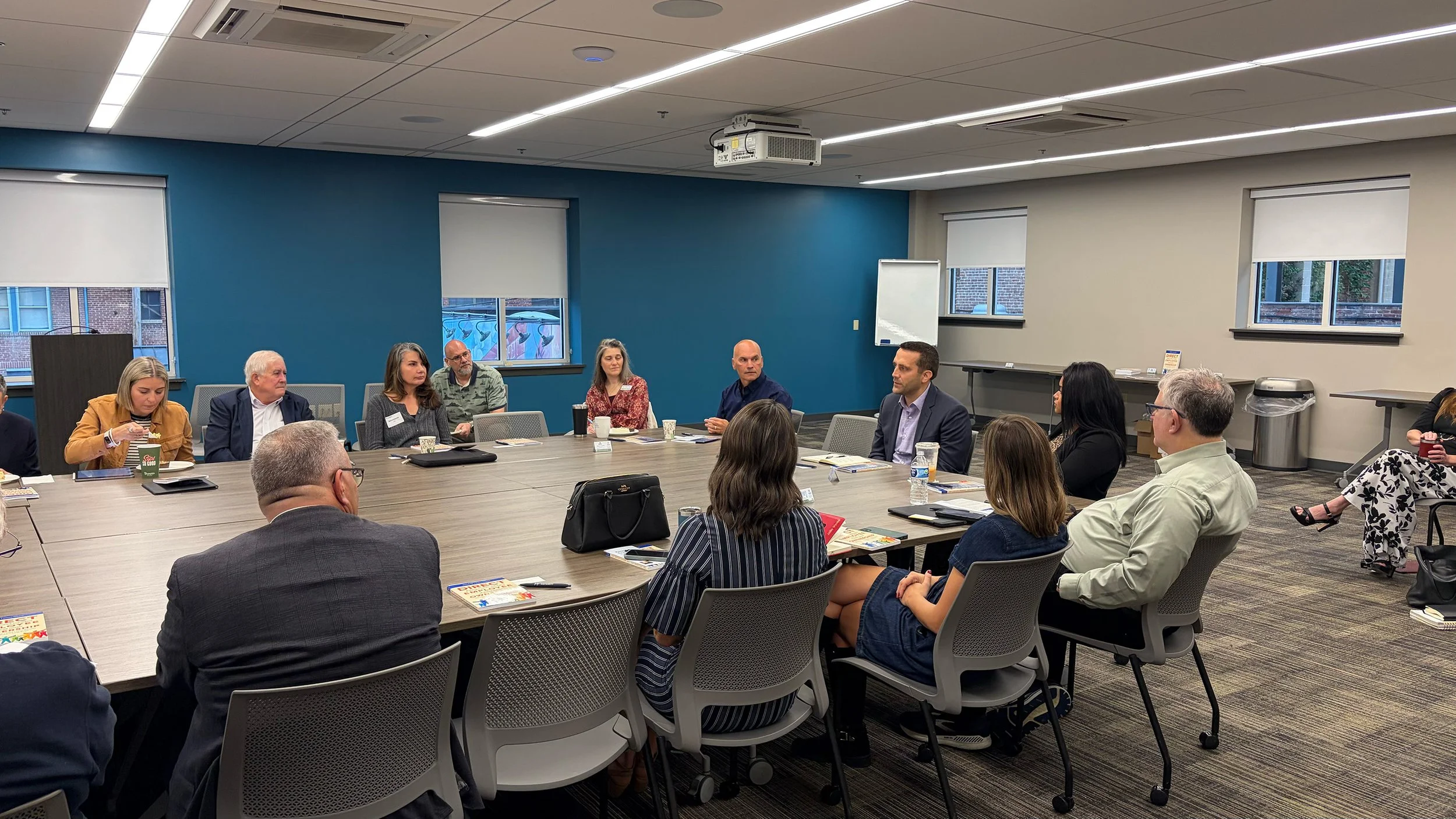
The Mittens, Joyland Roofing’s John Esh, and software-company founder Chip Cargas brought those different perspectives to a recent Storytellers conversation convened by Tandem Center for Shared Business Success and the Lancaster Chamber of Commerce.
Across their experiences, a common thread emerged: ownership can become a practical expression of the values that shape their businesses.
A Stake in the Future
At Nuclei, the discussion about ownership reached into the details of how employees would participate.
Ben described wanting the people contributing to the company’s growth to benefit from that growth. Jackie considered what meaningful access to ownership would require. An employee who cannot afford to purchase shares today might be able to do so later, as household finances and personal circumstances change. Keeping future opportunities available gives that person another chance to participate.
“One thing that Ben and I both agreed on is we never know where someone is in their season of life financially,” Jackie said. “As owners who believe so much in this, why would we ever shut that door?”
Nuclei is working toward a planned January 2028 launch of its Direct Employee Ownership program. Through Direct EO, employees can purchase and/or receive shares in the company where they work.
For a young business, the appeal extends well beyond the founder’s eventual departure. The Mittens are working with Tandem to design an ownership program that reflects the relationship they want to build with their team.
What a Family Business Passes Down
John Esh learned the roofing business alongside his father.
Founded in 1991, Joyland Roofing & Exteriors grew into a company that serves communities across southeastern and central Pennsylvania. John worked his way from ground cleanup to skilled installation and eventually became the company’s second-generation owner and CEO.
Along the way, he inherited an understanding of how work should be done: honestly, competently, and with enough persistence to finish properly. Those lessons shaped what John wants his own children to inherit.
“I believe in leaving my children an inheritance, and I like that concept,” John said. “But I would like to give my children more of a character and a skills inheritance than simply a financial inheritance.”
That belief has also shaped his approach to employees. He wants a company where people earn their positions and have opportunities to grow. Direct Employee Ownership offers a way to make room for both family inheritance and employee participation.
John said Joyland is designing its program for a planned early-2027 launch. For him and his business partner, the approach extends a leadership philosophy grounded in humility and helping people develop.
Joyland’s growth depends on retaining team members who understand its history, systems, and work. Treating them well deepens their appreciation of the company. An offer of ownership could deepen their commitment to it.
A Vision Carried Forward
When Chip Cargas started his company in 1988, he had a strong idea of the kind of workplace he wanted to create.
He envisioned people sharing information, collaborating, serving customers well, and participating generously in the resulting success. The business began in the corner of a bedroom, helping companies use technology more effectively.
Over time, Chip and the team grew Cargas into a business-software company with 200 employees that implements and supports accounting, operational, and customer-management systems, while developing products of its own.
Along the way, open-book management helped employees understand the business. Profit sharing gave them a direct connection to its performance. Then Chip heard another business leader describe his company’s experience with direct employee ownership.
“This is the final piece to live out the founding concept,” Chip recalled thinking.
In 1998, Cargas introduced a program through which all employees could become direct shareholders.
It created a path for continuity. Chip could gradually reduce his ownership while other employees increased theirs. Leadership responsibilities could move to people prepared to assume them. Nate Scott became CEO in 2017 after progressively taking on larger roles.
Keeping that path open took careful financial planning. During difficult periods, Cargas had to manage the cost of buying back employees’ shares while supporting the business itself. Preserving the opportunity for future owners meant maintaining the financial strength to support it.
As of February 2025, Chip was fully retired and no longer a shareholder. The ownership model he helped establish now carries his founding vision forward without him at the helm.
“In addition to all the motivational factors for the employees and being able to attract and keep the right people, it’s just such a smooth transition from generation to generation of ownership,” Chip said. “My biggest joy is to see it working … for the third generation now starting on that arc, and hopefully for many generations in the future.”
Making Shared Success Personal
As a nonprofit, Tandem helps owners explore whether Direct Employee Ownership fits their circumstances, evaluate the possibilities, design and implement a program, and continue strengthening it. Employee engagement and profit sharing are also part of its approach.
The owners of Nuclei, Joyland, and Cargas each recognized the unique opportunity to connect the future of their businesses with the people helping to create it.
For Tandem Executive Director Drew Mousetis, a former Cargas employee-owner, that connection has personal significance.
Ownership, he said, “provided the security that my wife and I needed to purchase the home that we’re raising our four small children in, which is deeply meaningful to me personally.”
Ben and Jackie are preparing to extend that kind of opportunity. John is considering how it can carry forward the lessons he inherited. Chip is watching others take responsibility for a vision he set in motion decades earlier.
In each case, the company’s future becomes something more people can help build … and share.